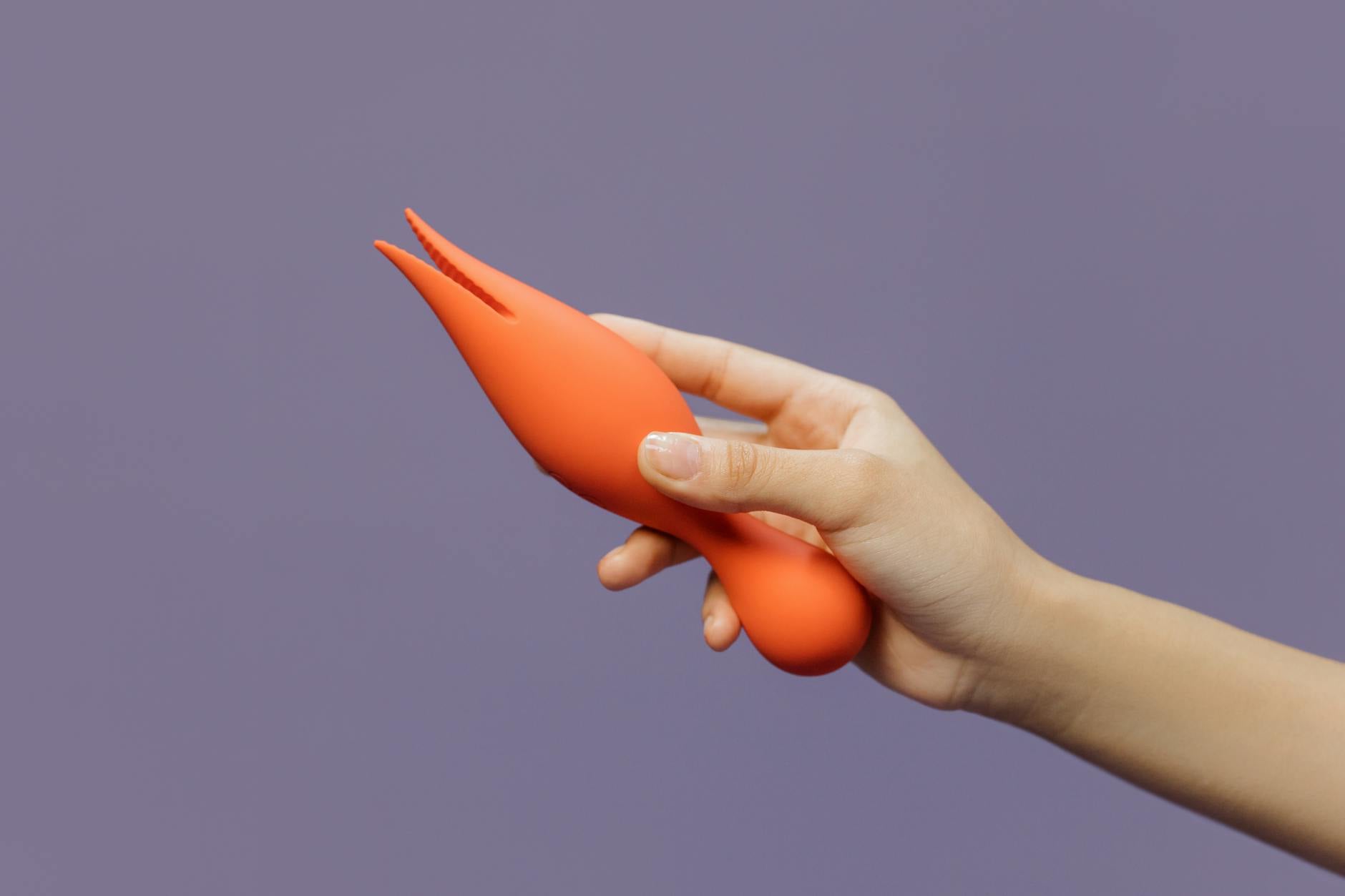
Let's start with the real tension
Honestly, this is one of the stickiest conversations I see in relationships. You want to explore using a clitoral vibrator like the Lemon, but your partner sees it as a threat to their role, their adequacy, or the intimacy you share. They might think you're dissatisfied. They might feel replaced. Or they might just think toys are weird, and that's that. None of those feelings are wrong. But they do block the door.
The thing is, introducing a lemon vibrator when your partner isn't on board rarely goes well if you try to convince them it's "no big deal." It's clearly a big deal to them. Pretending otherwise just builds resentment on both sides.
Why partners resist, and what it actually means
Most resistance falls into three buckets, and they need different responses.
The first is insecurity. Your partner worries that you wanting a toy means they're not enough. This is the most common one, and it's the most fixable because it's based on a misunderstanding. A clitoral vibrator doesn't replace him or her. It does something different. Full stop.
The second is unfamiliarity. They've never used toys before, they don't know how they work, and the whole category feels clinical or weird. They might think toys are for people who are broken or bored. This is purely an education gap.
The third is genuine discomfort. Some people have values or just a gut feeling about toys that doesn't budge. This one requires real acceptance, not conversion.
Before you do anything else, figure out which bucket your partner is in. The answer changes everything about how you move forward.
How to start the conversation without triggering a shutdown
Timing and setting matter wildly here. You're not having this talk in bed, mid-intimate moment, or when you're frustrated. You're having it on a normal day, outside the bedroom, when you're both calm and have time.
Start by naming what you think their concern actually is. Not "Don't you trust me?" That's combative. Try: "I think you might feel like I want this because I'm not satisfied with us, and I want to be clear about something that's probably not true."
Then be specific about what a lemon vibrator actually does. Air-suction stimulation works differently than hands or bodies do. It's not better or worse. It's just different. You can experience different sensations without one being a replacement for the other. Honestly, many people use toys in addition to partnered sex, not instead of it.
Here's what you don't do: you don't oversell it. You don't say "It would be so good for us" or "We could use it together." Not yet. Right now you're just naming the thing and clearing up the misunderstanding.
When your partner says no, and you respect that
Sometimes this conversation happens, and your partner's answer is still no. They don't want toys in the bedroom, period. Some people feel that way, and that boundary deserves respect.
But there's a difference between "I'm not ready yet" and "never." Listen for which one it actually is. If it's genuinely a hard no, then you have a bigger decision to sit with. Is this something you need in your sexual life? Is it a nice-to-have or a must-have?
If it's genuinely a hard boundary and you're genuinely frustrated, that's worth couples therapy. Not because anyone's wrong, but because you're bumping up against different needs, and a good therapist helps you figure out what's negotiable and what isn't.
When your partner is warming up, but slowly
More often, the answer is softer. "I don't know. I'm nervous. Maybe. But not right now."
This is progress. You're building trust, not pushing.
The next step isn't to pull out a lemon vibrator and show it to them. It's to normalize the idea. Maybe you watch something together that includes toys casually, without it being a big moment. Maybe you mention that you read something about clitoral vibrators and it made sense to you. Maybe you ask what would make them feel less nervous about the idea.
Some partners warm up when they understand how it works. Others warm up when they feel included in the decision. Some warm up when they realize you're not trying to change the dynamic of sex you already have, just add something alongside it.
Let that unfold. Don't rush it.
If they want to learn more, and you're ready to involve them
If your partner starts asking questions, that's when you can bring in information. Not a toy yet. Just information. What is suction stimulation? How is it different from vibration? Why might someone want that sensation?
You can read something together, or watch educational content about clitoral vibrators as a category. This removes the performance pressure and makes it about curiosity, not ultimatum.
When you do introduce an actual toy, some partners feel less threatened if they're part of choosing it. Let them see what you're considering. Ask what appeals to them or what makes them nervous. This isn't manipulation. It's genuine collaboration.

Photo by cottonbro studio on Pexels
The first time together, if it happens
If you get to the point where your partner agrees to try a lemon vibrator together, pace still matters. You're not using it in every session. You're introducing it as something that might feel good, not something that will fix anything or prove anything.
Start with the conversation about expectations. What are you hoping for? What is he or she nervous about? Is this replacing partnered sex or happening alongside it? Getting explicit about these things eliminates so much confusion.
When you do use it, talk during. Not performance talk, but real talk. "This feels amazing" or "I want to focus on just this for a minute." Let him or her see that you're present and enjoying yourself, not gone into some private moment they're locked out of. Some partners feel a lot less threatened when they understand that you're more connected, not less.
What to do if your partner tries and doesn't like it
There's a difference between "I don't like that sensation" and "I don't like that you want that sensation." One is a practical preference. The other is a real issue that might need longer work.
If it's the first one, that's fine. Not everything lands. Some people try suction toys and think they're weird. Some try them and love them but don't want them in partnered sessions. Some never want them at all. All of that is okay.
If it's the second one, then you're back to the real conversation. What is he or she actually afraid of? Is it something you can address together, or is this a values mismatch that needs outside help?
I work with a lot of couples where one person wants to explore and the other doesn't. Sometimes it's not actually about the toy. It's about control, or feeling left behind, or a shift in the relationship that the toy just happens to trigger. Once you figure out what's really going on, you can actually solve it.
When you use a Lemon vibrator solo, and that's your answer
Here's the thing nobody says plainly enough: you don't actually need your partner's permission to explore your own pleasure. If they're not interested in toys and you are, you can use them on your own. Full stop.
Some partners feel more secure when they know you're using toys independently, not asking them to participate in something they're uncomfortable with. Others need to know before you introduce something new into your shared space. That's a conversation you have based on how your relationship works and what agreements you've made.
But if your partner is genuinely uninterested and you're genuinely interested, buying a clitoral vibrator for solo use is completely reasonable. Your pleasure is yours. It doesn't depend on their comfort.
The long view on this
Relationships change. Partners change. Someone who says no to toys now might be curious in three years. Someone who says never might gradually soften. Or they might not. Both are okay.
What matters is that you're having honest conversations, that neither of you is hiding or resentful, and that you're respecting each other's actual boundaries versus projections of what you think they should feel.
Using a lemon vibrator with a reluctant partner starts long before you ever buy one. It starts with trust. It starts with understanding what they're actually scared of. It starts with patience. Some couples move through this quickly. Others need months. The pace depends on how much damage needs repairing and how much goodwill is already there.
If you're stuck in this conversation and nothing's shifting, that might be the moment to bring in a couples therapist who specializes in intimacy. Not because anyone's broken, but because sometimes you need a neutral person to help you hear each other.
People also ask
Will introducing a lemon vibrator make my partner feel replaced?
Not if you frame it correctly and do the work first. The key is naming that explicitly: "I'm not using this because you're not enough. I'm using it because my body responds to different sensations, and that doesn't diminish what we have together." Follow it up with actions. Use the vibrator sometimes, and keep having partnered sex other times. Let him or her see that the toy isn't a replacement, it's an addition. If your partner is still feeling insecure after you've had that conversation and shown it through behaviour, that's worth exploring with a therapist, because it might point to a deeper trust issue.
How do I know if my partner's resistance is a dealbreaker?
It's a dealbreaker if you genuinely can't live without exploring toys and your partner genuinely won't budge, even after an honest conversation. It's not a dealbreaker if you want toys but can live without them, or if your partner is resistant now but open to changing their mind. You get to decide what's essential for you and what's optional. That clarity makes it easier to negotiate. Just be honest with yourself about which category this actually falls into.
Can I use a lemon vibrator without telling my partner?
Technically, yes. In practice, I don't recommend it. If your partner finds out later, that becomes a trust issue on top of the toy resistance. You're better off either having the conversation, or being intentional about solo use and being transparent about it if it comes up. Secrecy usually causes more damage than the toy itself.
What if my partner thinks toys are slutty or wrong?
That's a values question, and it needs to be addressed as one. Is he or she worried about what toys say about you morally? That's worth a conversation about what you actually believe. Is he or she religious or culturally opposed? That's also worth understanding. Sometimes people soften when they realise that using a lemon vibrator doesn't contradict their values. Sometimes they don't. You can't force someone to be okay with something they're fundamentally uncomfortable with.
How long should I wait before trying again if my partner said no?
There's no fixed timeline. Some couples revisit the conversation after a few months once trust has rebuilt. Others wait years. Some never bring it up again, and that's fine too. The question is whether you're waiting because you genuinely believe your partner might come around, or because you're hoping they'll eventually change their mind so you can have what you want. The first is patience. The second is resentment building. Know which one you're doing.
Is it possible to use toys together if my partner is nervous?
Absolutely. The key is making it collaborative, not something you're doing to him or her. Let them choose the vibrator with you. Talk about expectations beforehand. Use it slowly. Stay connected with words and touch. Some partners feel way less nervous when they're actively involved in the decision and the experience, rather than passive. Make it about exploration together, not education or performance.
What comes next
If you're in this situation right now, your first move isn't to buy a Lemon vibrator. It's to have the actual conversation about what your partner is really scared of. Once you know that, you know what to address. Once you've addressed it honestly, the toy question becomes a lot smaller. You're not fighting about the vibrator anymore. You're just talking about whether you both want to try something new together.
That's a conversation you can actually win. Not by convincing your partner they're wrong, but by helping them understand what you actually need and figuring out if there's a way to meet in the middle.
If you'd like help thinking through relationship dynamics like this one, reach out. I work with couples navigating all kinds of shifts in intimacy and desire.