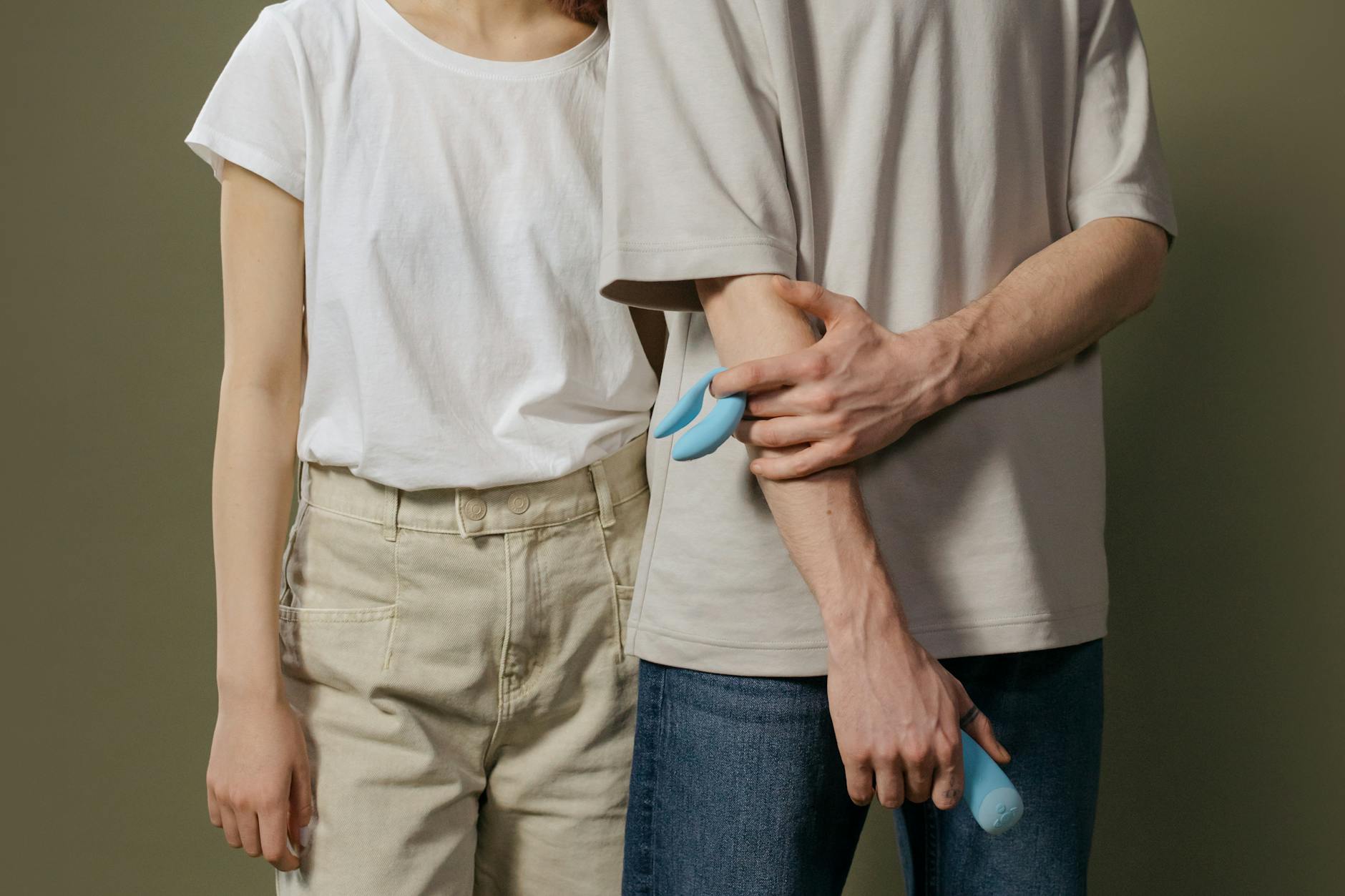
Let's start with what anxiety actually does to your body
Anxiety doesn't make you want sex less. It hijacks your nervous system. Your brain starts running a threat-detection loop instead of letting your body relax into sensation. You're checking in with yourself. "Am I close yet? Why isn't this working? What if it never works?" That internal commentary is a wall between you and anything that feels good.
This isn't a character flaw. It's neurology.
Why performance pressure kills arousal
When you're anxious about pleasure, your sympathetic nervous system (the fight-or-flight part) stays lit up. Arousal lives in the parasympathetic system. That's the relaxation mode. The two can't happen at the same time. It's literally physiologically impossible.
Most sex advice tells you to "relax" or "stop thinking." Which is helpful in the same way telling an insomniac to "just sleep" is helpful. Not at all.
The real issue is that anxiety creates a feedback loop. You notice you're anxious. Noticing the anxiety makes you more anxious. You tense up. Tension makes arousal harder. Which makes you more anxious. After a few rounds of that, plenty of people just give up.
Why a lemon clitoral vibrator actually interrupts the anxiety loop
This is where lemon vibrators are weirdly good at solving an anxiety problem.
Unlike traditional vibrators that require you to guide sensation, the suction action of a lemon vibrator demands your attention. You can't think about your performance while you're experiencing intense, localized pleasure. It's cognitively demanding in the right way. Your brain has to process what's happening instead of running the anxiety script.
Second, suction works differently on the nervous system than regular vibration. It activates deeper nerve clusters in a way that feels more integrated. People with anxiety often describe it as "grounding." You're anchored in your body instead of lost in your head.
Third, lemon sexual toys introduce novelty. Anxiety loves patterns. If you've been trying the same technique for years and it's connected to failure, your brain associates it with threat. A new tool, a different sensation, a fresh approach. That resets the neural pathway.
The preparation that matters
Using a lemon vibrator when you're anxious isn't about willpower. It's about reducing the decision load.
Before you start, do three things.
First, choose a specific time and place. Not "sometime this weekend." Tonight at 8 p.m., doors locked, phone in another room. This removes the "should I be doing this right now?" friction that anxiety loves.
Second, have water-based lubricant within arm's reach. Anxiety makes people tense. Tension makes everything feel less smooth. Good lubrication removes one friction source and lets you focus on sensation instead of discomfort.
Third, decide on a stopping point beforehand. "I'm going to use this for 15 minutes, then I'm done. No performance goals." Permission to stop removes the pressure. Weirdly, this often means you don't want to stop when the time comes. But having an exit plan makes the whole experience less high-stakes.
How to start when your nervous system is already activated
If you're already feeling anxious, don't jump to the lemon vibrator. Spend 5 minutes just lying down, breathing slowly. In for four counts, hold for four, out for four. Do nothing else. Your sympathetic nervous system needs to downshift first.
Once you feel a bit calmer, touch your own body without any device. Shoulders, arms, belly, thighs. Not genitals yet. Just notice. Temperature, texture, the feeling of your own skin. This is called bottom-up processing. You're sending your brain the message "we're safe, pay attention to sensation."
Then, introduce the lemon vibrator. Start on the lowest setting. Don't expect anything. Literally, your job is to notice what you feel, not to chase an outcome.
When your mind still won't quit
If thoughts keep intruding, that's normal. Anxiety doesn't disappear on command.
Here's what works: when you notice a thought ("this isn't working"), acknowledge it without judgment. "There's that thought." Then redirect your attention to one physical sensation. The warmth, the pressure, the vibration, the rhythm. Not trying to ignore the thought, just gently moving your focus back.
It takes practice. After a few sessions, your brain learns that this time, this tool, this place equals safety and sensation. The anxiety starts to quiet.
The role of a partner if you have one
If you're in a relationship, your partner knowing that you're working with anxiety helps. They don't need to be in the room. They just need to know the door is locked and the time is yours.
Better yet, you could talk about it afterward if you want to. "I'm noticing anxiety shows up around this, and I'm trying something to help." That's different from "I'm broken and nothing works." It's information, not failure.
Some people find that knowing a partner is nearby (but not watching, not waiting) takes some of the pressure off. Others need complete solitude. You get to decide.
When this is linked to something bigger
If anxiety about pleasure is part of a larger anxiety pattern (social anxiety, generalized anxiety, panic), talk to a therapist. A lemon vibrator is not a treatment. It's a tool that works better when you're also addressing the root.
That said, many people find that reconnecting with physical pleasure using a tool that actually works shifts something in their nervous system. It's not a cure. But it can be a beginning.
FAQ
Can a lemon vibrator help with performance anxiety during partnered sex?
Yes, indirectly. If you can reconnect with pleasure on your own using a lem vibrator, you build evidence that your body works. That shifts the internal narrative from "I'm broken" to "I can feel good." That confidence often carries over to partnered sex. But using it alone first removes the pressure of someone else's presence or timeline.
How long does it take before anxiety stops interfering?
It depends. Some people notice a difference after two or three solo sessions. Others take weeks. The key is consistency, not intensity. Using the lemon vibrator twice a week for a month typically shows more progress than one marathon session. You're retraining your nervous system, and that takes repetition.
Is it normal to feel more anxious the first time I use a vibrator?
Completely normal. New sensation, new stimulation, unfamiliar tool. Your nervous system might interpret novelty as threat. If you feel anxious, pause. Breathe. You're not failing. You're just meeting your system where it is. Try again another day. It usually gets easier.
What if I use the lemon vibrator and still don't orgasm?
That's okay. Orgasm isn't the goal when you're working with anxiety. Presence is. Sensation is. If you come away from a session feeling more connected to your body and less in your head, that's a win. Orgasm might follow eventually, or it might not. Either way, the pleasure of the experience is separate from the outcome.
Should I tell my doctor about anxiety during sex?
Yes, if it's affecting your quality of life. Sexual anxiety can be tied to hormones, medications, relationship stress, trauma, or just the way your nervous system is wired. A good doctor won't dismiss it. They'll help you understand what's driving it and explore options, which might include therapy, medication, or lifestyle changes. A lemon clitoral vibrator is a helpful tool, but it's not a substitute for professional support if you need it.
Can I use a lemon vibrator if I'm on anxiety medication?
Most anxiety medications don't interfere with vibrator use. But some do affect sexual sensation or arousal. If you notice that your medication is dampening pleasure, talk to your prescriber. They might adjust the dose or try a different class. Don't stop taking medication without guidance. The trade-off between anxiety relief and sexual sensation is worth discussing with your doctor.